

Free Affidavit of Identity Template
Use this Affidavit of Identity to legally affirm who you are. This document is an essential tool for victims of identity theft, individuals with lost identification documents, or those undergoing a background check. Our template includes all necessary legal elements, including a signature line and notary jurat, to ensure your statement is recognized as a valid sworn declaration by third parties.
 PDF
PDF Word
Word NOTARYPRO GUARANTEE
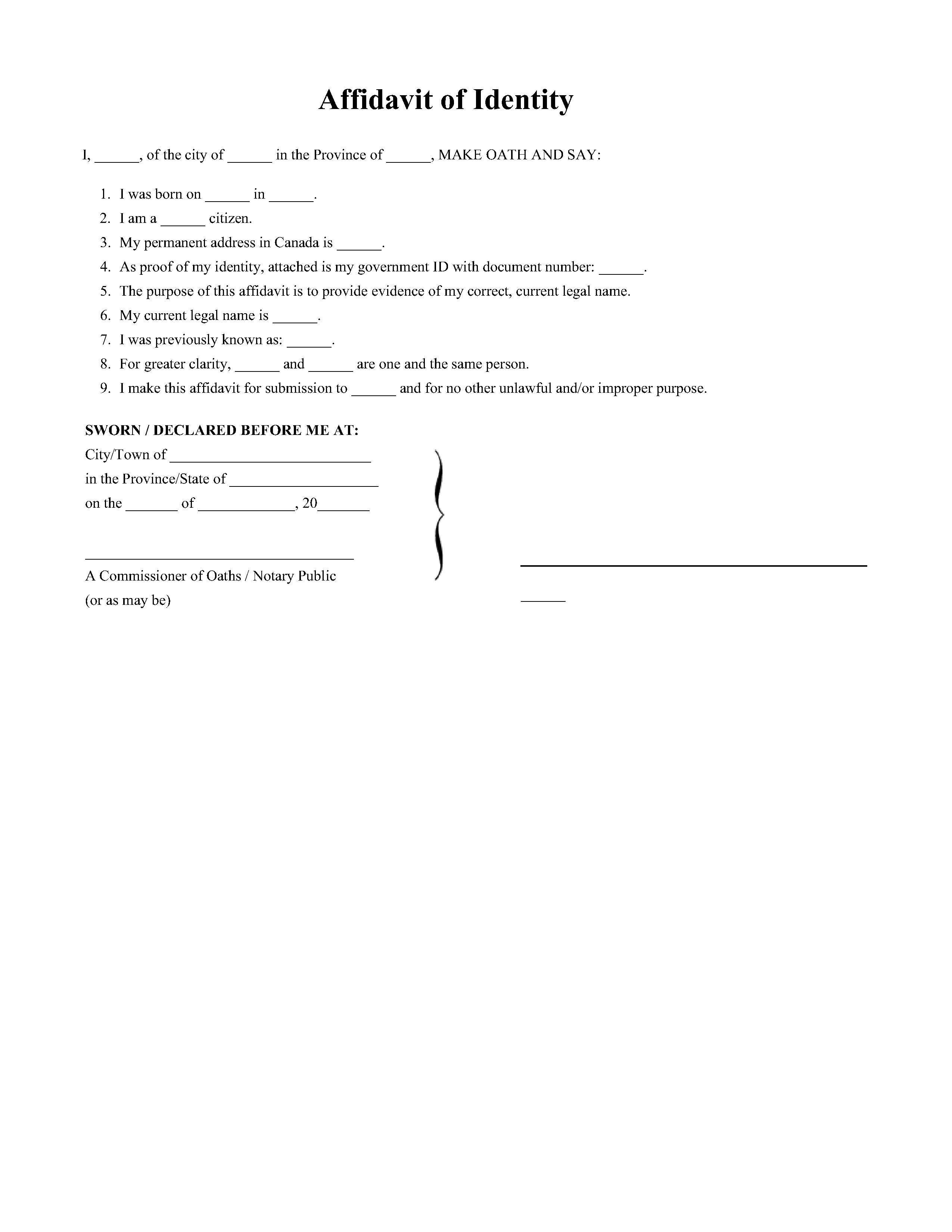
 Preview
Meet with a notary public and draft your document
Meet a licensed professional online to draft your document. Get it completed in minutes.
 $99.95
$249.00
• Save: $149.05 (60%)
$99.95
$249.00
• Save: $149.05 (60%)

Featured NotaryPro Expert in Toronto
 See how our experts help you draft

How it Works
Fill out our simple
online form with your
information.
Review and approve
the generated
document.
Once your document
is ready, you can
Notarise!
NOTARYPRO GUARANTEE
Meet with a notary public and draft your document
Meet a licensed professional online to draft your document. Get it completed in minutes.
$99.95
$249.00
• Save: $149.05 (60%)
Featured NotaryPro Expert in Toronto
See how our experts help you draft
Contents
-
What is an Affidavit of Identity?

-
When Do You Need an Affidavit of Identity?
-
Details to Include in Your Affidavit of Identity
-
Does an Affidavit of Identity Need to Be Commissioned?
-
Frequently Asked Questions
What is an Affidavit of Identity?
In Canada, an Affidavit of Identity is a legal document used to establish and confirm your true identity. It’s sometimes known as an Affidavit of One and the Same Person. Essentially, it helps prove your identity when your name appears differently across identification documents or records.
Do you have Questions about your Affidavit of Identity Document ?
 Create Affidavit of Identity Now
When Do You Need an Affidavit of Identity?
An Affidavit of Identity is used to help maintain a cohesive identity across official and administrative processes within Canada. You must affirm that the information in your Affidavit is true before an authorized official, like a notary, to make it valid.
It is frequently required when names differ due to marriage, divorce, cultural naming conventions, transliteration differences, and clerical errors. Organizations commonly rely on this Affidavit as supporting evidence alongside government-issued identification or legal name-change documents. It’s not usually used as proof of identity on its own.
You’d typically use this Affidavit to explain name discrepancies across records held by the following institutions:
- Federal and provincial government agencies and departments
- Financial institutions
- Insurers
- Pension administrators
- Courts and court registries
- Insurance companies
- Employers and payroll administrators
- Indigenous services and band administration offices
- Professional and occupational regulatory bodies
- Educational institutions
- Immigration, citizenship, and border-related authorities
- Land registry offices and parties involved in real estate transactions
- Lawyers, law firms, and notaries handling legal matters
- Estates, trusts, and probate administrators
Details to Include in Your Affidavit of Identity
The exact details and information included in your Affidavit may vary depending on the jurisdiction’s specific requirements and why it’s being prepared. Generally, an Affidavit of Identity should include the following information:
- Your Personal Information: Include your legal name, current address, date of birth, and contact information.
- Previous Names or Variations: Provide a list of any previous names or variations of your name used or by which you have been known.
- Include maiden names, previous surnames, nicknames, or any other names associated with you.
- Reason for the Affidavit: The Affidavit should state the reason for declaring that you are one and the same person.
- Supporting Documentation: Depending on the specific requirements or purpose of the Affidavit, you may need to provide supporting documentation.
- This can include copies of identification documents, marriage certificates, court orders for name changes, or other relevant paperwork.
- Commissioning: You must sign the Affidavit in the presence of a notary public or commissioner of oaths. The notary will add their official seal or stamp and also sign the document to certify its authenticity.
Does an Affidavit of Identity Need to Be Commissioned?
An Affidavit of Identity must be commissioned by an authorized official, like a notary public or commissioner of oaths, to be valid.
During commissioning, you swear or affirm that the contents of your Affidavit are true before the official. You’ll sign your Affidavit while the official witnesses your signature, and they’ll sign it too. Check out our blog to learn more about the process of commissioning.
Once commissioned, the Affidavit becomes a legally recognized document that pension authorities, insurers, and other institutions can accept.
You can meet with a notary public online to have your Affidavit of Identity commissioned in 7 minutes, from anywhere.
Providing false or inaccurate information in an Affidavit may constitute perjury, a criminal offence in Canada.
Frequently Asked Questions
Yes, an Affidavit of Identity can be used for immigration purposes. It can help establish a consistent identity and address variations in names across documents.
No, submitting an Affidavit of Identity does not guarantee automatic acceptance or recognition of your identity by authorities. This document’s acceptance and recognition depend on specific requirements and regulations of the authorities or organizations involved.
 for instant explanation
NOTARYPRO GUARANTEE

 1004+ Downloads