

Child Travel Consent Letter from Canada Form
 PDF
PDF Word
Word NOTARYPRO GUARANTEE
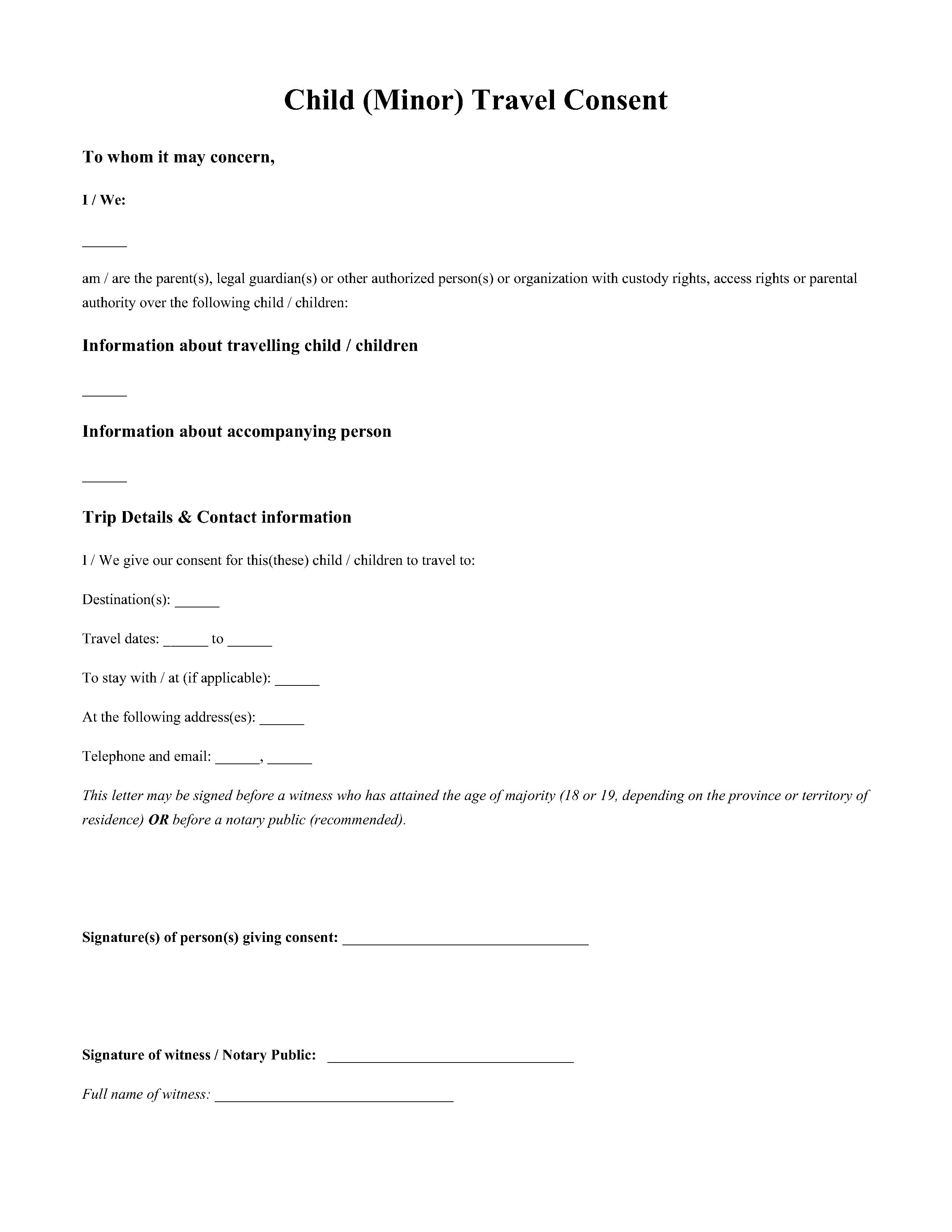
 Preview
Meet with a notary public and draft your document
Meet a licensed professional online to draft your document. Get it completed in minutes.
 $99.95
$249.00
• Save: $149.05 (60%)
$99.95
$249.00
• Save: $149.05 (60%)

Featured NotaryPro Expert in Toronto
 See how our experts help you draft
NOTARYPRO GUARANTEE
See how our experts help you draft
NOTARYPRO GUARANTEE
How it Works
Fill out our simple
online form with your
information.
Review and approve
the generated
document.
Once your document
is ready, you can
Notarise!
Meet with a notary public and draft your document
Meet a licensed professional online to draft your document. Get it completed in minutes.
$99.95
$249.00
• Save: $149.05 (60%)
Featured NotaryPro Expert in Toronto
See how our experts help you draft
Contents
-
When To Use a Travel Consent Letter

-
At What Age is Parental Consent No Longer Required?
-
What is a Travel Consent Letter in Canada?
-
The Importance of a Travel Consent Letter for Children
-
Who Signs a Travel Consent Letter from Canada?
-
How to Draft a Travel Consent Letter from Canada
-
Documents to Pack with a Travel Consent Letter for Children
-
Sign Your Travel Consent Letter with a Notary Online
-
Frequently Asked Questions
When To Use a Travel Consent Letter
You’ll want to have a consent letter for children travelling abroad when a child is crossing borders without both parents or guardians. Within Canada, a Travel Consent Letter is not usually required, even if a child is travelling with only one parent, another adult, or alone.
For example, Kim and John have a child named Jessica. Kim is taking Jessica to Jamaica for March Break, but John isn’t going with them. John would sign a Travel Consent Letter to show that Kim has his permission to travel abroad with Jessica.
You’ll want to pack a Travel Consent Letter if your child is travelling abroad:
- without one or both parents for even part of a trip,
- with only one parent or legal guardian,
- with relatives, family friends, or any adult who isn’t a legal guardian,
- with a group, like a sports team or a community program,
- with both parents, but returning with only one, or
- even for a short day trip.
At What Age is Parental Consent No Longer Required?
The definition of a child varies across countries, so anyone under 19 should carry a consent letter for children travelling outside Canada. Some foreign countries have their own requirements. It’s best to check the Travel Advice and Advisories for further details.
While some transportation companies have policies that don’t require a Consent Letter, authorities at the destination may ask for proof of permission.
Note: If the child is legally emancipated, this standard may not apply.
Do you have Questions about your Child Travel Consent Letter from Canada Document ?
 Create Child Travel Consent Letter from Canada Now
What is a Travel Consent Letter in Canada?
A Child Travel Consent Letter provides written permission for a minor child to travel abroad without one or both legal guardians. International authorities may ask to see this letter before allowing your child to enter or leave a country.
This letter is also sometimes called a Child Travel Consent Form. A minor requires this letter when travelling beyond Canadian borders with:
- relatives or friends,
- alone as an unaccompanied minor,
- just one parent or legal guardian, or
- a group (e.g., a school or sports team).
The Importance of a Travel Consent Letter for Children
Although having a Travel Consent Letter isn’t legally required, it’s recommended. The Government of Canada and many international authorities recommend that a child carry a Letter when travelling without both parents or guardians.
Airline staff, border officials, and immigration agents may ask to see one before allowing a child to enter or leave a country. These travel checks are in place to help avoid international child abductions. Without a Travel Consent Letter, countries may refuse entry to children and accompanying persons. In some cases, the child and accompanying adult(s) may also have trouble returning to Canada.
Each country has its own entry and exit requirements for children. You can see your destination country’s requirements in the Travel Advice and Advisories or contact the nearest embassy or consulate before travelling.
Note: If there is a risk that the accompanying parent will not return the child to Canada, consult a lawyer before signing.
Who Signs a Travel Consent Letter from Canada?
A consent letter for children travelling abroad must have certain signatures in order to be valid. The following individuals should sign a Travel Consent Letter:
- Unaccompanying Parents:
- Parents who are married or in a common-law relationship and are not accompanying the child on their international trip.
- Separated or divorced parents who are not accompanying the child on their international trip and have 1 of the following:
- Access or visitation rights
- Decision-making responsibility for the child
- Guardianship of the child (in Alberta and British Columbia)
- Legal Guardians or Caregivers: Foster parents, grandparents, or other appointed guardians must sign if they are responsible for a child’s care.
- Child Welfare Agencies: If a child is in temporary care, a representative from the agency must sign the letter.
The Government of Canada recommends commissioning the letter. This means that a notary public witnesses and signs the letter, which gives border officials more confidence in its authenticity.
Note: Court orders or agreements may also specify who must sign. To learn more about specific family circumstances that dictate who must sign the letter, see this source.
How to Draft a Travel Consent Letter from Canada
Drafting a Travel Consent Letter is simple, you can use our template and add the details below:
The Child’s Information
- Full name, date of birth, and place of birth
- Birth certificate registration number and issuing authority
- Passport number, date of issue, and issuing authority
- Number of children travelling (if applicable)
Trip Details
- Destination(s) and travel dates
- Telephone number and email address of the child’s destination (if available)
- The duration of the trip (the departure and return date)
- Emergency Contact Information (recommended)
Parents or Guardians
- Full names and contact details of both parents or guardians
- A statement saying both parents or guardians consent to the trip
- Signatures from accompanying parent(s) or guardian(s)
Accompanying Party
- Names and relationship of the person(s) travelling with a child
- The accompanying adult(s)’ passport number, date of issue, and issuing authority
Documents to Pack with a Travel Consent Letter for Children
The person accompanying the child should bring the original, signed consent letter for children travelling outside Canada, not a copy. Along with the letter, it's important to carry some supporting documents.
Border officials may ask to see them at any time, so having them ready will make the process smoother. You’ll want your child or the accompanying adult to have the documents below:
- Child’s Passport and/or Birth Certificate: Confirms your child’s identity and their relationship to their parents.
- Copy of the Non-Accompanying Parent’s Passport or ID: Shows that the correct person signed the letter.
- Travel Itinerary and Accommodation Addresses: Shows where your child will be staying and for how long.
Note: If you’ve always been the sole parent or guardian, bring a long-form birth certificate showing only one parent.
In certain cases, you may also want to pack the following:
- Child Medical Consent Form: Allows other adults to make medical decisions for your child in emergencies.
- Custody Orders or Agreements: If parents aren’t together, any documents that clarify custody arrangements or access rights.
- Death Certificate: If one parent has passed away, this explains why one parent cannot sign the letter.
Note: A child may be treated as a citizen of another country and subject to that country’s rules. If you’re unsure which documents are required, check with the destination country’s embassy or consulate.
Sign Your Travel Consent Letter with a Notary Online
The Government of Canada recommends that your Travel Consent Letter be commissioned (witnessed and signed by a notary). Even if not mandatory, a notary’s signature decreases the chances of officials questioning your letter’s authenticity. That said, there’s no guarantee that foreign authorities will recognize a Travel Consent Letter.
You can meet with a notary public online to commission your Travel Consent Letter in under 7 minutes, from anywhere.
Frequently Asked Questions
No, the Government of Canada does not a minor to carry a Travel Consent Letter for domestic travel within Canada.
Any parent or guardian not accompanying the child on their international travels must sign the letter. If one parent does not have legal rights, carry official documents that prove one parent has sole authority.
If the other parent is deceased and you have full custody of your child, pack a copy of the death certificate of the deceased parent. This applies when you’re accompanying your child and when your child travels without you.
Yes, both parents can sign just one letter. You can also sign separate letters, it’s up to you.
Yes, you can write one letter for multiple children if they remain together during their travels. We recommend writing separate letters for children who will be travelling separately for part of the trip.
Yes, you should prepare a new Travel Consent Letter for each trip. Open-ended consent letters are generally discouraged, as border officials may question their validity.
If a child is travelling with multiple adults, it’s best to only name one of the adults who will be accompanying them the entire time.
 for instant explanation
NOTARYPRO GUARANTEE

Child Travel Consent Letter from Canada
 5991+ Downloads