

Free Letter of Authorization Template
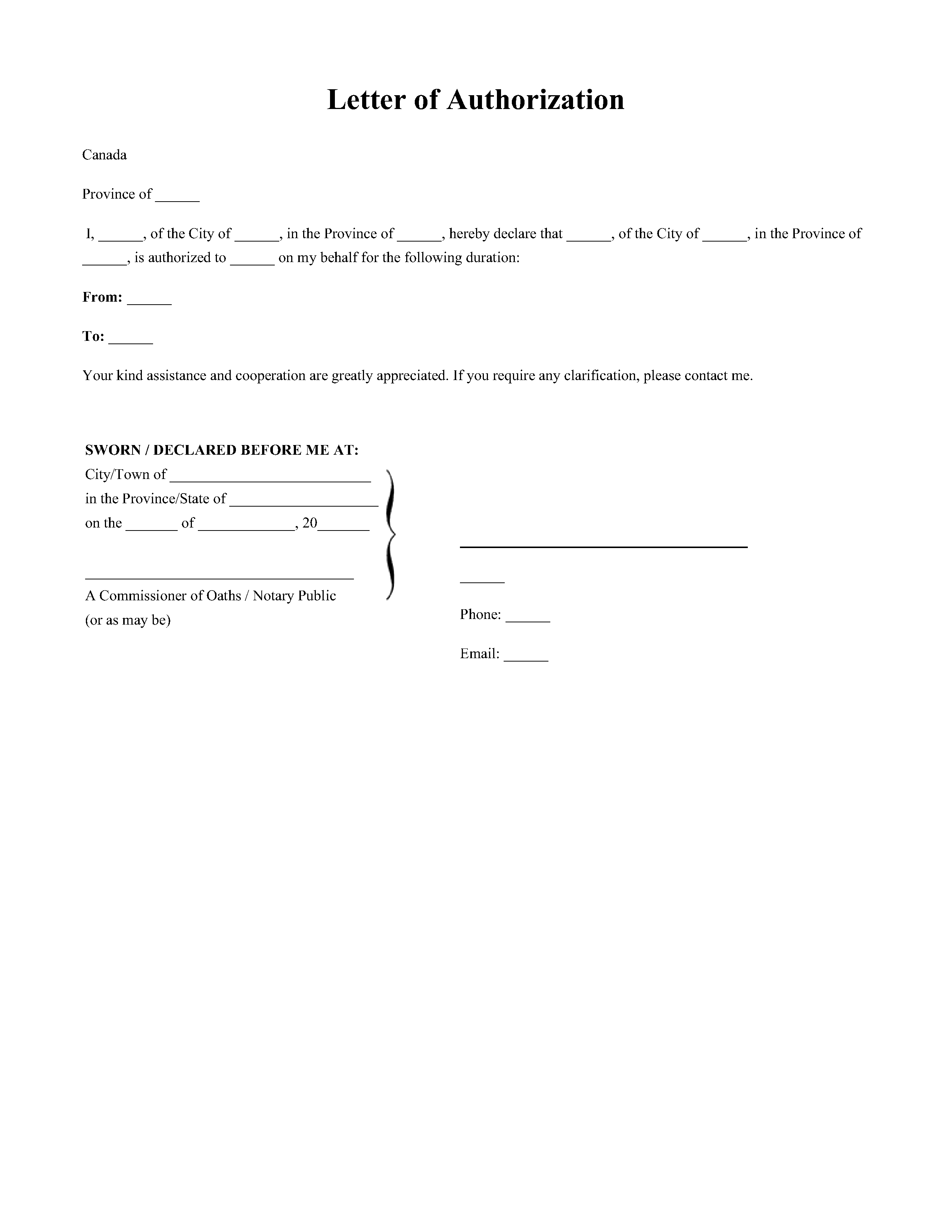
A formal document used to grant a person or organization the authority to perform specific actions on your behalf. This template includes sections for identifying both parties, the specific scope of authority, and the duration of the permission. Perfect for administrative, medical, or minor legal authorizations.
 PDF
PDF Word
Word Preview
 NOTARYPRO GUARANTEE
How it Works
Fill out our simple
online form with your
information.
Review and approve
the generated
document.
Once your document
is ready, you can
Notarise!
Meet with a notary public and draft your document
Meet a licensed professional online to draft your document. Get it completed in minutes.
 $99.95
$249.00
• Save: $149.05 (60%)
$99.95
$249.00
• Save: $149.05 (60%)

Featured NotaryPro Expert in Toronto
 See how our experts help you draft
Contents
-
What is a Letter of Authorization?

-
When Do You Need a Letter of Authorization?
-
The Purpose of a Letter of Authorization
-
How to Write a Letter of Authorization
-
Commissioning Your Letter of Authorization
-
Frequently Asked Questions
What is a Letter of Authorization?
A Letter of Authorization formally grants limited, task-specific permission from one party (“Principal”) to another (“Agent”). It permits the Agent to perform certain actions on the Principal’s behalf. Individuals and businesses can use this Letter to authorize someone to take specific actions, including but not limited to:
- picking up financial documents or instruments
- engaging in negotiations
- entering into agreements
- completing specific tasks on their behalf
It includes the names and signatures of the entity or individual granting permission, and the authorized individual(s). A Letter of Authorization should contain all the correct elements to ensure permission is appropriately granted.
Do you have Questions about your Letter of Authorization Document ?
 Create Letter of Authorization Now
When Do You Need a Letter of Authorization?
You might need to draft a Letter of Authorization in the following situations:
Minimal Financial Transaction Management: Grant a trusted person, like your spouse or business associate, permission to pick up bank drafts, checks, or other instruments.
Note: for more comprehensive financial transaction management, you’ll need a Power of Attorney instead.
Document Pickup: Enable someone to pick up documents, like transcripts or corporate documentation, and authorize them to do so.
The Purpose of a Letter of Authorization
A Letter of Authorization plays a pivotal role in various circumstances, officially delegating authority and streamlining processes. More specifically, a Letter of Authorization for the following purposes:
- Validates granting specific rights or permissions to another party.
- Affirms that the authorized party has the right to act on behalf of the granting party.
- Specifies the authorization duration, scope, and limitations, if applicable.
- Provides a legal basis for the authorized party to take action or make decisions.
- Streamlines processes by enabling efficient task delegation, decision-making, and representation.
- Helps ensure compliance with legal and regulatory requirements, particularly in stricter industries.
- Protects against unauthorized and potentially dangerous activities.
How to Write a Letter of Authorization
Drafting your Letter of Authorization is relatively straightforward; simply follow the steps below to ensure it’s clear and accepted:
- List the Parties Involved: Provide the full names and contact details of the authorizer (party granting authority) and the authorized party (party receiving authority).
- Outline the Authorization Scope: Specify the actions or decisions the authorized party is allowed to take on behalf of you or your business. Provide sufficient detail to avoid ambiguity or confusion.
- Specify Authority Duration: Provide the date you’re issuing the authority and if applicable, the date it expires. If the authorization isn’t granted indefinitely, an expiration date ensures it is only valid for a specific period.
- Sign and Date Your Letter: Ensure your Letter is signed by the party granting authority and the party receiving it.
- Commission Your Letter: You can meet with a notary public to have your letter commissioned, thereby enhancing its authenticity and legal validity. Book an online notary appointment to complete commissioning in under 7 minutes.
For bonus tips on completing your letter, see our Letter of Authorization Guide.
Commissioning Your Letter of Authorization
A commissioned Letter of Authorization carries greater legal weight, making it more valid if challenged. Commissioning also enhances authenticity and provides stronger protection if legal issues arise in the future. Essentially, commissioned documents hold more weight in court.
During a commissioning appointment with a notary, you’ll swear or affirm that the contents of your Letter are accurate. You’ll also present your ID to confirm your identity, and the notary will witness you signing your Letter. They’ll also sign it, and add their seal to make everything official.
Book an online notary appointment to sign your Letter from anywhere with Wi-Fi today!
Frequently Asked Questions
No, an Authorization Letter and a Power of Attorney are different legal documents. A Power of Attorney grants broader authority to the attorney to act on the grantor's behalf in various matters. On the other hand, an Authorization Letter is typically used for more specific, limited authorizations.
Yes, in most cases, you can revoke or cancel an Authorization Letter at any time, provided you have the legal authority to do so. You may give written notice to the authorized individual or entity, letting them know you’re revoking their authority. It’s a good idea to consult a lawyer to understand the legal implications and ensure you properly inform all parties.
A Letter of Authorization doesn’t grant broad or ongoing legal authority. You cannot typically use it to manage bank accounts, make medical decisions, sign legal contracts, or act indefinitely on someone’s behalf. You need a formal Power of Attorney for such permissions.
 for instant explanation
NOTARYPRO GUARANTEE
 572+ Downloads